

A Wellness Perspective on Speaking with Intention
At Austin Wellness, we often explore how healing does not only happen through insight, but through practice. One of the most overlooked areas of growth in mental health and recovery is communication. Not just what we say, but how we say it, when we say it, and from what internal state we are speaking.
The Next Conversation by Jefferson Fisher offers a grounded and practical framework that aligns closely with wellness-orientated and trauma-informed work. The book reminds us that meaningful change begins with the next interaction we choose to engage in with awareness and regulation.
Fisher challenges a common belief that progress comes from winning arguments. Instead, he reframes communication as a process of self-regulation, clarity, and connection.
“Never win an argument, or you will lose a lot more than you gain.”
(Fisher, 2025)
From a wellness perspective, this speaks directly to relational patterns that keep individuals stuck in cycles of defensiveness, resentment, and emotional exhaustion.
Regulation Comes Before Response
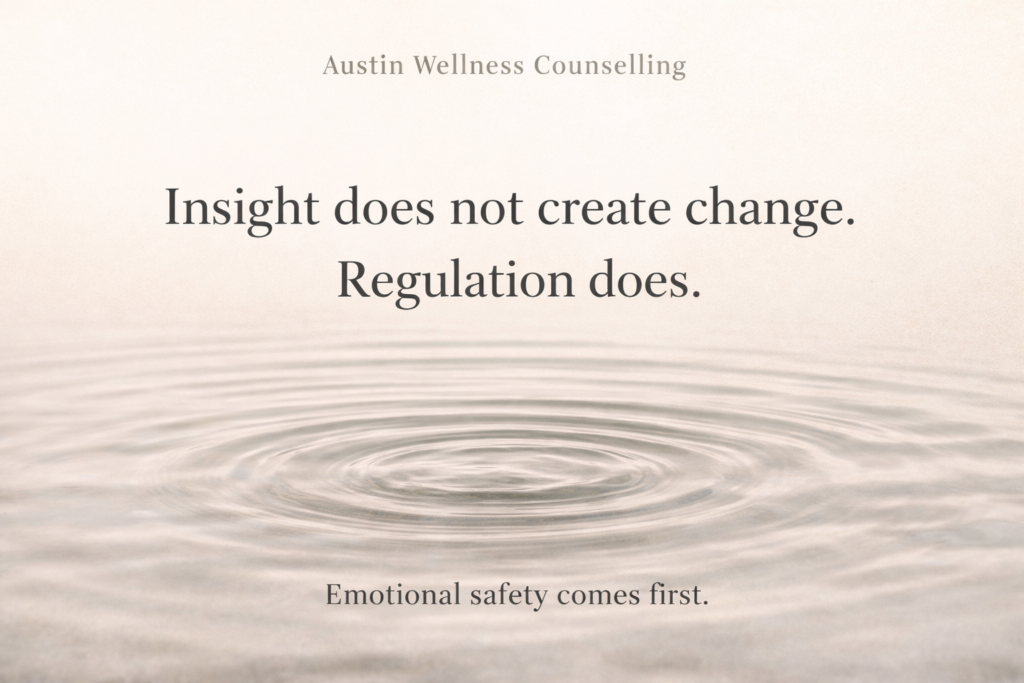
In therapeutic and recovery spaces, regulation is foundational. Without it, insight alone is not enough. Fisher places strong emphasis on the importance of calming the nervous system before speaking, a principle that aligns closely with trauma-informed practice.
He writes,
“When you regulate your reactions before responding, you keep a clear head and a calm mind.”
(Fisher, 2025)
At Austin Wellness, this mirrors the work of slowing down, noticing bodily responses, and choosing presence over impulse. Communication that arises from dysregulation often reinforces old survival patterns rather than fostering growth.
Assertiveness as Self-Respect
Many individuals in recovery and therapy struggle to find balance in their communication. They may avoid conflict entirely or move toward aggression when overwhelmed. Fisher reframes assertiveness in a way that feels both compassionate and grounded.
“Confidence is not an act. It is an outcome.”
(Fisher, 2025)
In a wellness context, confidence develops when individuals feel safe enough to express needs, values, and boundaries without abandoning themselves or attacking others. Assertive communication is not about control. It is about alignment with one’s sense of self.
Shifting from Proving to Learning
A core message in The Next Conversation is the invitation to approach dialogue with curiosity rather than the need to be right. This shift is particularly important in relationships where past wounds or power imbalances exist.
Fisher states,
“When you frame a conversation as something to learn rather than something to prove, you take out the difficulty in building connection.”
(Fisher, 2025)
From a wellness lens, this approach reduces shame, defensiveness, and escalation. It allows conversations to become spaces of understanding rather than battlegrounds.
Social Media as Psychoeducation
Fisher’s work extends beyond the book through his social media presence, where he shares short, practical communication tools rooted in everyday experiences. As described in the book, his content was never designed to impress but to serve.
“Instead of selling myself, I would provide value for free. Not about what would benefit me, but about what would benefit other people.”
(Fisher, 2025)
This philosophy reflects a psychoeducational approach that resonates with Austin Wellness values. Education empowers individuals to take ownership of their growth, especially when tools are accessible and grounded in real life application.
Why This Matters for Mental Health and Recovery
Communication shapes the quality of our relationships, our self talk, and our ability to remain regulated under stress. Fisher reminds readers that words carry long-term impact.
“Your words have a ripple effect. They matter to generations of people you will never meet.”
(Fisher, 2025)
In wellness work, this reinforces the responsibility of speaking with intention, especially in families, partnerships, and recovery environments where emotional safety is essential.
Closing Reflection
Healing does not require perfect communication. It requires conscious communication. The Next Conversation invites individuals to pause, breathe, and choose words that reflect who they are becoming rather than who they were taught to be in survival mode.
As Fisher concludes,
“Go make your next conversation the one that changes everything.”
(Fisher, 2025)
At Austin Wellness, this aligns with a simple but powerful truth
Growth happens one regulated, intentional conversation at a time.
Reference
Fisher, J. (2025). The Next Conversation: Argue Less, Talk More. New York: TarcherPerigee.