
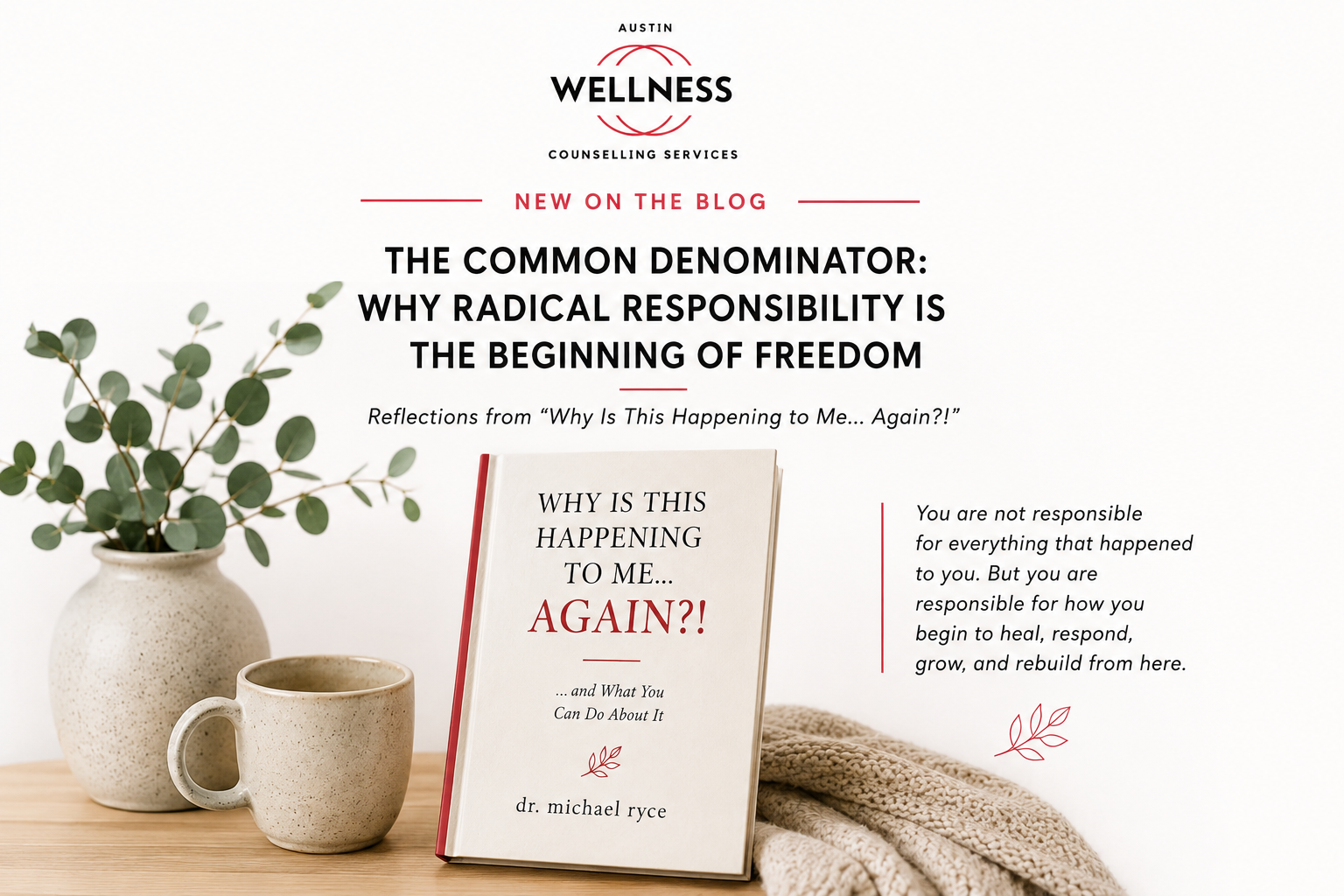
There are certain books that entertain us, some that educate us, and then there are those rare books that confront us.
The kind that gently, and sometimes not so gently, hold up a mirror and ask us to look honestly at ourselves.
Recently, I found myself reading a book that did exactly that.
One of the most profound lessons I took away from it was a simple but life-changing realisation:
The common denominator in every situation in my life is me.
At first glance, this may sound harsh or even self-critical. However, the deeper I sat with this idea, the more I realised that it was not about blame. It was about freedom.
There is an important difference.
Many of us spend years trying to understand why we feel stuck. We examine our childhoods, our families, our relationships, our circumstances, and the people who have hurt us. While these factors undoubtedly influence us, there comes a point where healing requires us to ask a different question:
“What is my role in what happens next?”
That question changes everything.
The Difference Between Blame and Responsibility
One of the greatest misconceptions about responsibility is that it means carrying guilt.
It does not.
Responsibility is not standing in a courtroom condemning yourself for every mistake you have ever made.
Responsibility is standing in front of a mirror and acknowledging that you have the power to influence what comes next.
Therapeutically, this is where genuine change begins.
As long as our healing depends on someone else changing, apologising, understanding us, rescuing us, or validating us, we remain powerless.
The moment we recognise our own agency, we begin to reclaim our lives.
Responsibility is not punishment.
Responsibility is empowerment.
Waiting for a Rescue That Never Comes
Many people unknowingly spend their lives waiting.
Waiting for the perfect relationship.
Waiting for healing.
Waiting for confidence.
Waiting for motivation.
Waiting for someone to finally see them, choose them, or save them.
The difficult truth is that no shining knight is coming.
And perhaps that is one of the most liberating truths we can ever discover.
The person who will ultimately rescue your life is you.
Not through perfection.
Not through force.
But through daily choices.
Through honest self-reflection.
Through being willing to question the stories you have always believed about yourself.
The reality is that meaningful change rarely arrives through dramatic moments. More often, it arrives through small decisions repeated consistently over time.
Challenging the Reality You Inherited
Many of the beliefs we carry about ourselves were formed long before we had the ability to question them.
Perhaps you learned that your worth depended on achievement.
Perhaps you learned that emotions were weaknesses.
Perhaps you learned that love had to be earned.
Perhaps you learned that your needs did not matter.
These beliefs often become the lens through which we view our entire lives.
The problem is that inherited beliefs are not always truthful beliefs.
Growth requires us to examine the realities we have accepted without question.
Not every belief deserves permanent residency in your mind.
Sometimes healing means asking:
Is this actually true?
Does this belief still serve me?
Is there another way of seeing this?
When we begin challenging outdated narratives, we create space for new possibilities.
Radical Acceptance and Personal Power
In therapeutic work, radical acceptance is often misunderstood.
People assume it means giving up.
In reality, radical acceptance means acknowledging reality as it currently exists without fighting against it.
Acceptance does not mean approval.
Acceptance does not mean liking what happened.
Acceptance simply means seeing clearly.
Once we see clearly, we can respond effectively.
When we stop arguing with reality, we free up energy to create change.
This is where responsibility and acceptance meet.
We accept what is.
Then we take responsibility for what comes next.
Love as a Healing Force
Another powerful theme throughout this book was the understanding of love.
Not love as romance.
Not love as validation.
Not love as something we endlessly search for in other people.
But love as a deeper spiritual reality.
A force that invites us toward growth, truth, compassion, and accountability.
Often, we search for love horizontally through achievement, status, relationships, possessions, or approval.
Yet many people discover that none of these things fully satisfies the deeper longing within.
Healing begins when we recognise that our worth was never something we had to earn.
From that place, change becomes less about fixing ourselves and more about becoming who we were always meant to be.
Progress, Not Perfection
One of the most important lessons in recovery, mental health, and personal growth is that change is rarely linear.
Old habits will return.
Old beliefs will resurface.
Old fears will reappear.
The goal is not perfection.
The goal is awareness.
When you notice yourself slipping into an old pattern, the invitation is not self-punishment.
The invitation is curiosity.
Can I respond differently this time?
Can I choose differently this time?
Can I take one step forward today?
Growth happens through repetition, not revelation alone.
Insight without action changes very little.
Action, even imperfect action, changes everything.
Final Thoughts
This book challenged me to look honestly at my own life.
It pushed me to examine areas where I had unknowingly handed responsibility over to circumstances, other people, or old belief systems.
It reminded me that while I cannot control everything that happens to me, I am responsible for how I respond.
Perhaps that is one of the most empowering truths we can ever discover.
You may not be responsible for what happened to you.
But you are responsible for what you do with it.
And while responsibility can feel intimidating at first, it may just be the very thing that sets you free.
Because the moment we stop waiting for someone else to change our lives, we become capable of changing them ourselves.